Training
Multi-room training: planning plenary sessions and workshops
Multiple halls only help with clear routes, designing the general lecture, workshops, rotations and the closing session as one program.
Multi-group learning is easily overloaded with movement: participants finish a general lecture, look for their own room, change floors, arrive late for the workshop and return to the final session at different times, the problem is not the number of rooms, but the program in which transitions are not considered part of the learning process.
To make the day work, first determine the learning outcomes and the composition of the groups, then distribute the classes to the halls, and only then approve the schedule. The practical tool is a route matrix: for each group, you can see the occupation, the room, the host, the equipment and the transition time.
Divide the contents before allocating the rooms
Write down all types of work: general lecture, example analysis, workshop, group discussion, consultation and final discussion. For each block, specify the expected action of the participant. Listen to the report, work at the table, discuss in a team and demonstrate the result - different requirements for furniture, sound and time.
Don't just divide people equally. One group may need more space from their desks or equipment, another group may need more silence to discuss, and a third group may need a screen and a microphone, and the composition of the group is determined by the task, not by the convenience of arithmetic.
Build a route matrix.
The lines of the matrix are the time slots, the columns are the groups, each cell is the hall, the occupation and the person in charge, and you need a separate column for the transitions and the preparation of the room.
| Interval | Group A | Group B | Group B | Monitoring |
|---|---|---|---|---|
| General opening | Main hall: single introductory part | Landing and materials | ||
| Transition | Route 1 | Route 2 | Stays in the room. | Navigation and coordinators |
| Workshop 1 | Task. | Discussion | Discussion | Presenters and technicians |
| rotation | Next room. | Next room. | Next room. | Synchronous termination |
| Outcome | Common room: conclusions and questions | Gathering results | ||
If the block lengths are different, don't make all the groups rotate at the same time, you can leave a backup window, a consultation, or work independently, the main thing is that the participant sees his route in advance, and the host knows when the room should be ready.
Related rooms to tasks
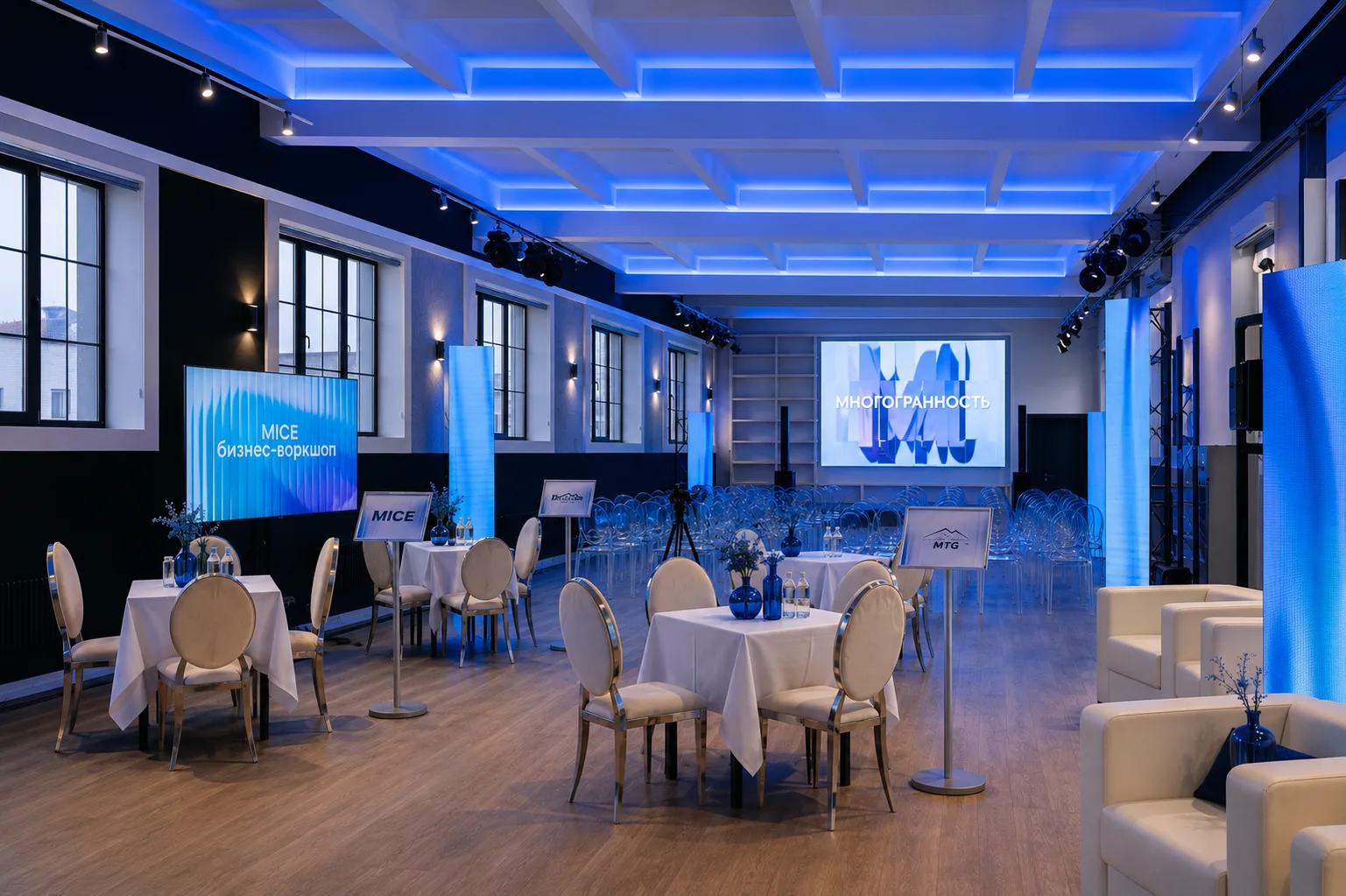
In Culture Palace, the main hall of 420 m² is suitable for a general program of up to 500 participants in a theatre-style seating area: the second floor hall occupies 160 m² and has its own foyer of 135 m²; the third floor hall is 320 m². The total capacity of up to 1,000 guests refers to a distributed program in several halls, rather than to one classroom.
For each class, adjust the actual arrangement. The number of seats in the theater cannot be transferred to the workshop with tables. Specify if you need work surfaces, microphones, screen, materials, power supply and space for the host. If the room is used in two groups in a row, add time to rearrange and change materials.
Consider the transition as a learning time
Check the routes on the site before the schedule is approved. How long does it take for the entire group to exit, where the participants meet the oncoming flow, how do they find the right floor, and what happens to the late ones? There is no universal norm of minutes: it is determined by the plan, the number of people and the format of the movement.
The names of the groups should match in the letter to the participant, on the badge, in the program, on the pointers and at the coordinator. The color or letter is useful only when used in the same way everywhere. At forks, appoint a person who directs the flow, rather than explaining the route after the group has already gone wrong.
Synchronize the presenters
Even strong teachers finish blocks at different times. Before an event, agree on a single completion signal, an order of questions, and a rule for an unfinished exercise. The host needs to know which is more important: finish the discussion or clear the room for rotation.
Collect a short list of the host: the goal of the block, the composition of the group, the equipment, the start and end time, the result that is transmitted to the overall finale, and the contact of the coordinator, then the parallel classes are folded into one program, and do not exist as separate meetings.
Do a shortened rehearsal
- Walk the path of the participant from registration to the first place.
- Check the transition from the general room to each room.
- Open materials and display presentations on screens.
- Check the change of groups and the preparation of jobs.
- Collect the results of the workshops for the final session.
- Work out the lateness of one group and the backup scenario.
For the calculation, attach the program, the number of participants by group, seating options and technical tasks. training, seminary and the Culture PalaceThe purpose of distribution is not to occupy all the premises, but to give each group a clear sequence of work and return the audience to the overall result without wasting time.
We'll discuss your event.
The date, the number of guests and the program will help to choose the configuration of the site and prepare the calculation.
Contact the Culture Palace team